
Striving to remove barriers that prevent us from building Vibrant, Diverse, Inclusive, Accessible Communities!
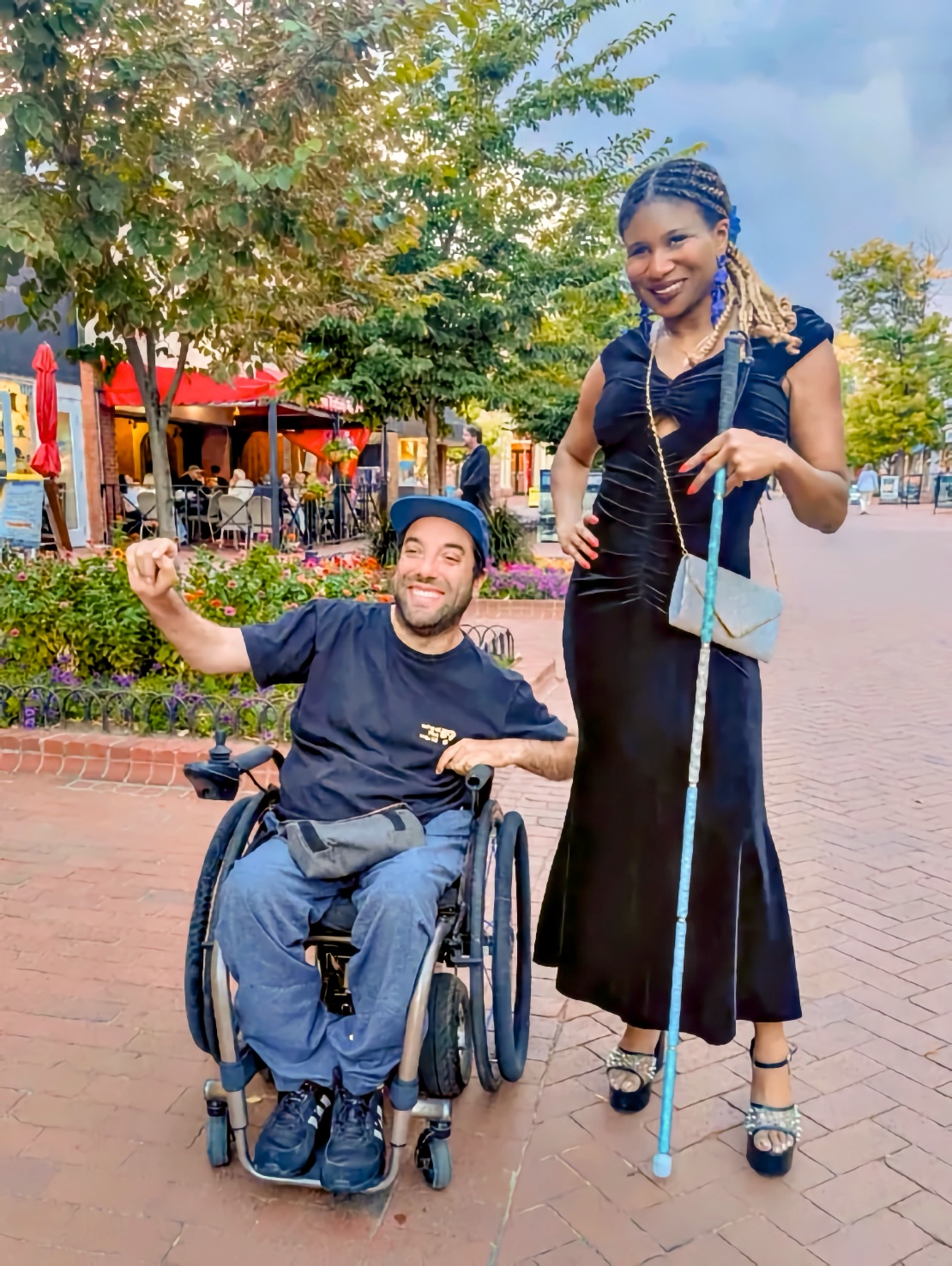
Blind singer Lachi calls her colorful, jeweled cane her “glam cane.” It is a white cane in purpose, though far brighter, and it gives her independence as she travels for personal trips and for her work as a touring performer and speaker. It also starts conversations, which give her a chance to teach people about her disability. Born with coloboma, she now has no sight in one eye and some sight in the other. She embraces being a Black woman with a disability and uses her voice, as a singer, to break the stigma around disability.
Travel feeds her music, from St. Petersburg to Honolulu. She remembers St. Petersburg during the 2019 holidays as welcoming, “like being in a live snow globe.” Yet access varies, even within one country: on tour in Peru, Lima was highly accessible while other cities were not. So she travels with her cane, sometimes a sighted companion, screen reading on her phone, voice apps at airports and smart glasses, and she sends every client a document describing her disabilities and requests. She still misses clubs, street festivals and stylish hotels that shut her out.
For Lachi, true accessibility goes beyond the Americans with Disabilities Act. It means disabled travelers having the same freedom to go where they like, on a whim and in style, as everyone else, and it includes how they are treated. She rejects the phrase “differently abled” and names what she calls “handler’s syndrome,” when people speak to a companion instead of the disabled person. At one airport gate, an airline employee asked the man beside her whether she needed assistance. She said she was traveling on her own and added, “If I needed help, I have no trouble charming you into buying me a whole drink first.”
Dignity and autonomy are what every traveler wants. Lachi is the founder and CEO of Recording Artists and Music Professionals with Disabilities, which brings disability culture forward in the music industry, and her book “I Identify as Blind” is due from Penguin Random House in 2026. Her advice to Blind travelers is to allow extra time, plan ahead and find the tools that make independence possible, and the confidence to ask others when they choose. Difficulties in travel, she says, come not from blindness but from lacking the tools. Each trip she takes is a form of advocacy.
We should speak directly to a disabled person, never to the person beside them. We should make our venues, hotels and events accessible without stripping away their style. Treating disabled travelers with the same dignity and autonomy as everyone else would move us toward Vibrant, Diverse, Inclusive, Accessible Communities for People with Disabilities.
Accessibility is measured by the freedom and dignity it gives, not by compliance alone.
Read the Full Article: Her bedazzled cane helps her travel the world (and spark change).
By: Kathleen Wong
Questions for Reflection
- When have we spoken to a companion instead of the disabled person in front of us?
- Which of our venues and events are accessible only in a plain, second rate way?
- Do our travel plans and events give disabled people the freedom to be spontaneous?
- Lachi sends a document describing her access requests. Do we ask for that information and act on it?
- Which words, like “differently abled,” do we use to avoid talking honestly about disability?
