
Striving to remove barriers that prevent us from building Vibrant, Diverse, Inclusive, Accessible Communities!
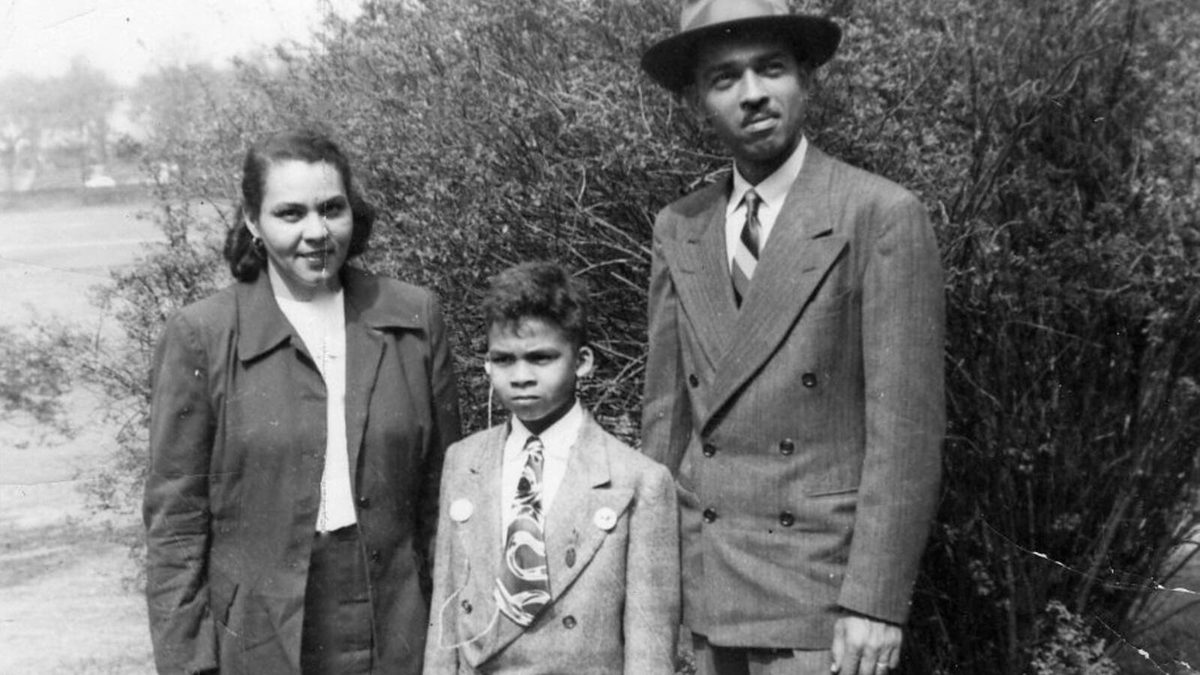
Louise B. Miller’s name rarely comes up in conversations about civil rights activists, yet this mother of a Black Deaf son changed who could attend the one school for deaf children within the District of Columbia (D.C.). Her daughter Carol still remembers the day her brother Kenneth, then eight years old, left home for another state. She remembers the trunk that held his belongings, a relative who made the trip each month to see him, and the joy that came when each school year ended and he returned. Their parents did not want him sent away and had no real choice, because being Black and Deaf at the same time put Kenneth among children who were sent far from home to be educated. A letter the family saved shows the school’s answer when Louise tried to enroll him: it said there was segregation in the city’s schools and pointed Black Deaf children toward a school in Maryland, hours from home. Louise visited that school, saw the conditions, and refused to let her son stay there, so the family paid for him to attend a school in Pennsylvania instead.
Louise did not stop at her own family’s story. She led Black parents whose children were denied entry to the Kendall School, and together they filed a class action lawsuit over the school system. The Kendall School had allowed Black students to attend from 1898 to 1905 and then stopped admitting them. The families won in July 1952, two years ahead of the Supreme Court’s Brown v. Board of Education ruling, and people credit that victory with setting a precedent. Because of what Louise did, Gallaudet University’s campus enrolled Black students ahead of schools elsewhere in the nation that were ordered to desegregate. The win also let the families stay in the city with their children.
A win in court did not bring equal treatment. During the first two years, Black Deaf students attended the Kendall School Division II, kept apart in a building of their own with teachers of their own. When it was time to graduate, White students received diplomas and they did not. Gallaudet University took a step to make that wrong right this past July, with a graduation ceremony more than six decades late that gave diplomas to 24 students who were owed them. Relatives accepted the diplomas for classmates who did not live to see it, and five surviving students came to the ceremony. Kenneth was among them, and he signed “At last!” while crossing the stage with a walker. His mother had fought to see him educated on that campus, and there he stood onstage in a cap and gown.
One parent who refuses to look away can open a door for every child behind her. Gallaudet University has now launched the public phase of the Necessity of Now campaign, which has a goal of $23 million. Of that, $13 million will go to the Louise B. Miller Pathways and Gardens, an outdoor space for learning on campus, and $10 million will go to the Center for Black Deaf Studies, described as the world’s first center of this kind. The Center will keep a lasting record of Black Deaf lives, and Evon Black, interim codirector of the Center and cochair of the campaign, calls Louise an unsung hero of education and racial justice. Carol says her mother’s lesson is to correct a wrong whenever you see one, and she pictures visitors on the pathways asking why Black children were sent away as they pass a statue that stands for every parent who had no choice. We grow as a community when we walk through histories unlike our own and consult the people who face the barriers firsthand, yet Louise’s name went unrecognized for too long.
Because Louise Miller’s name rarely comes up in conversations about civil rights activists, we should say it aloud and tell why she stood up for Black Deaf children. To correct a wrong we find, we should first ask Carol Miller’s question: why were Black children sent away? A story about a mother who would not leave her son at a school hours from home would bring Vibrant, Diverse, Inclusive, Accessible Communities for People with Disabilities within reach of the families who were once sent away.
Saying her name would keep the door she opened from closing again.
Read the Full Article: The enduring legacy of a D.C. mother who fought for Black deaf children.
By: Theresa Vargas
Questions for Reflection
- Louise B. Miller’s name does not usually come up when we talk about civil rights activists. Whose names are missing from the histories we tell in our own community?
- Kenneth was eight when he left home to get an education, and his sister Carol still remembers the trunk. Who in our community is sent away or kept out to get what others receive close to home?
- Louise visited the school in Maryland, saw the conditions, and refused to leave her son there. When have we looked at conditions for ourselves before agreeing to a plan?
- The families won in 1952, yet Black Deaf students were placed in a separate school with separate teachers and were not given diplomas. How do we check that a win brings equal treatment and not only a seat?
- Carol Miller says that if you see a wrong, you must try to correct it. What wrong have we seen, and what is our next step?
- Carol pictures visitors to the pathways asking why Black children were sent away. What question would we ask ourselves where people were once kept out?
